Structure route
Gym duffle bags
Best when capacity, a wide top opening, hand carry and optional shoulder carry are central to the brief. Review shoe, wet-item and bottle separation before sampling.

Develop gym duffles, studio totes and active carry systems around your Tech Pack, intended load, branding and launch requirements.
A gym bag has to work with shoes, clothing, towels, bottles, personal-care items and repeated carrying. Start with what the user carries, how the bag is opened and whether separated storage is required.
Best when capacity, a wide top opening, hand carry and optional shoulder carry are central to the brief. Review shoe, wet-item and bottle separation before sampling.
Best for studio, yoga, wellness and lighter daily carry. Define handle drop, top closure, standing shape and internal organization around the intended contents.
Review foam thickness, laminated face fabric, reinforcement, seam construction, lining, hardware and loaded performance against the buyer’s Tech Pack before confirming feasibility.
Neoprene sleeves and bag structures are related capabilities, but they do not prove a completed neoprene gym-bag order. The combined construction must be reviewed as its own project.
The first sample should test the real carrying task. These are the decisions we need before dimensions, materials and construction can be reviewed responsibly.
| Decision | Duffle route | Tote route | Approve before sampling |
|---|---|---|---|
| Primary load | Clothing, shoes, towel, bottle and gear | Studio items, towel, bottle and daily essentials | Representative contents and target capacity |
| Carry system | Short handles plus optional detachable shoulder strap | Long shoulder handles; optional secondary grip | Handle drop, strap range and attachment points |
| Opening | Top or extended zipper opening | Open top, recessed zipper or full top zip | Access pattern and closure security |
| Organization | Shoe, wet-item, bottle and quick-access zones | Fewer, lighter internal divisions | Required compartments and cleanability |
| Material route | Woven, quilted, coated or foam-laminated options | Canvas, woven technical or foam-laminated options | Material specification, colour and claim/document scope |
These are real Ecophay products that demonstrate relevant duffle and tote structures. They are not presented as completed neoprene gym-bag projects.
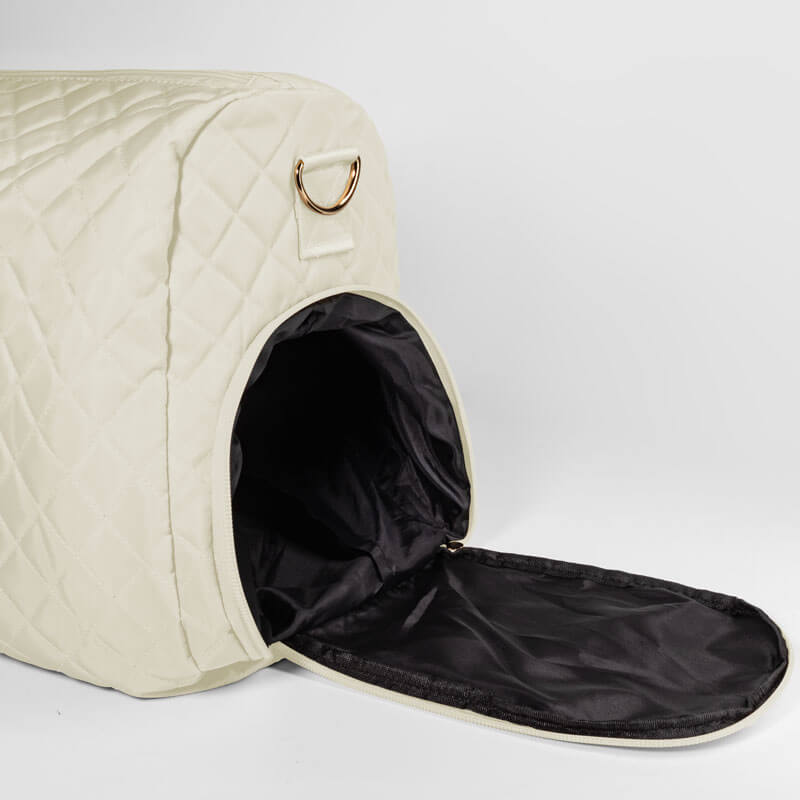
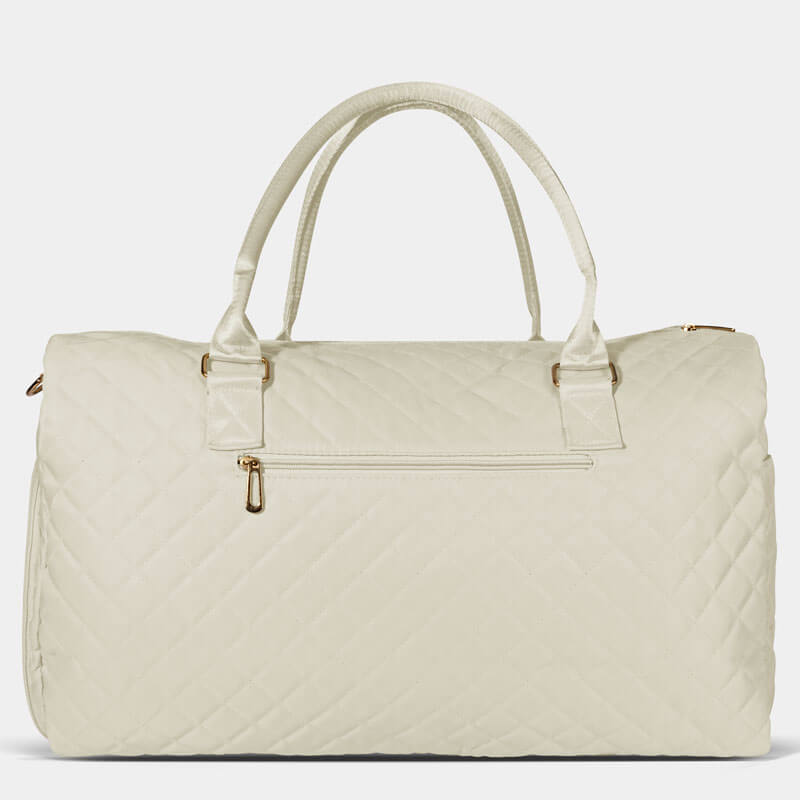
Recorded size: 525 × 340 × 160 mm. Existing product information identifies recycled PET, top zipper, carry handles and detachable shoulder carry.
Existing product evidence
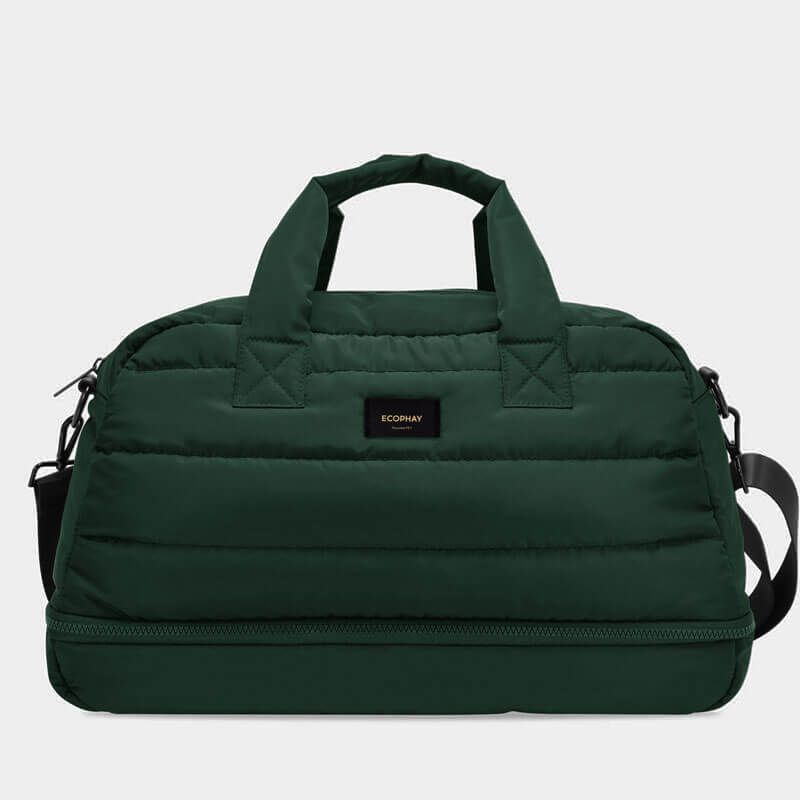
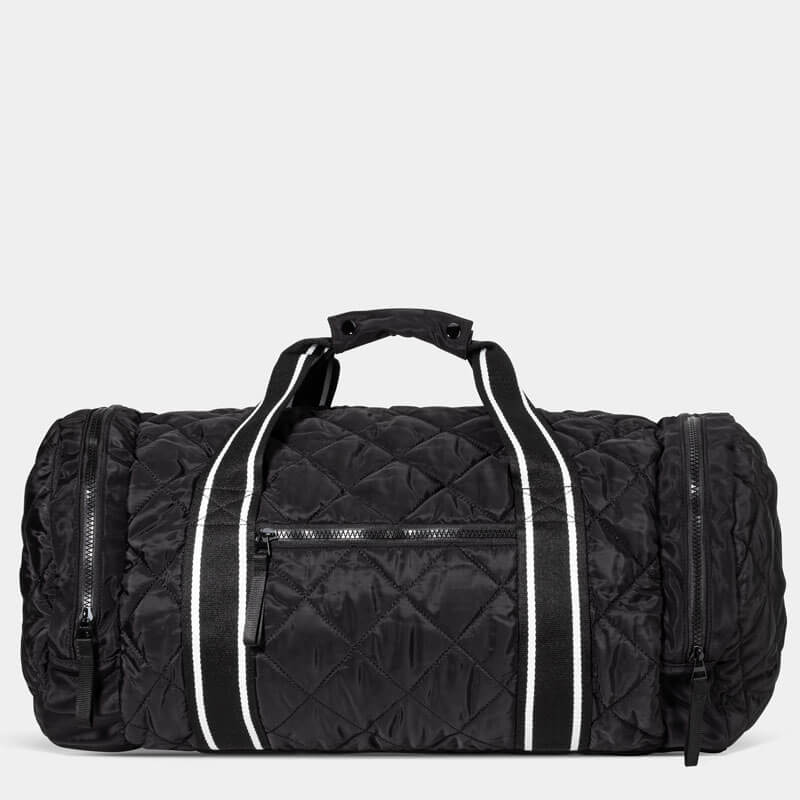
Recorded size: 450 × 200 × 260 mm. Existing product information identifies recycled PET, detachable shoulder carry and a separate lower storage zone.
Existing product evidence
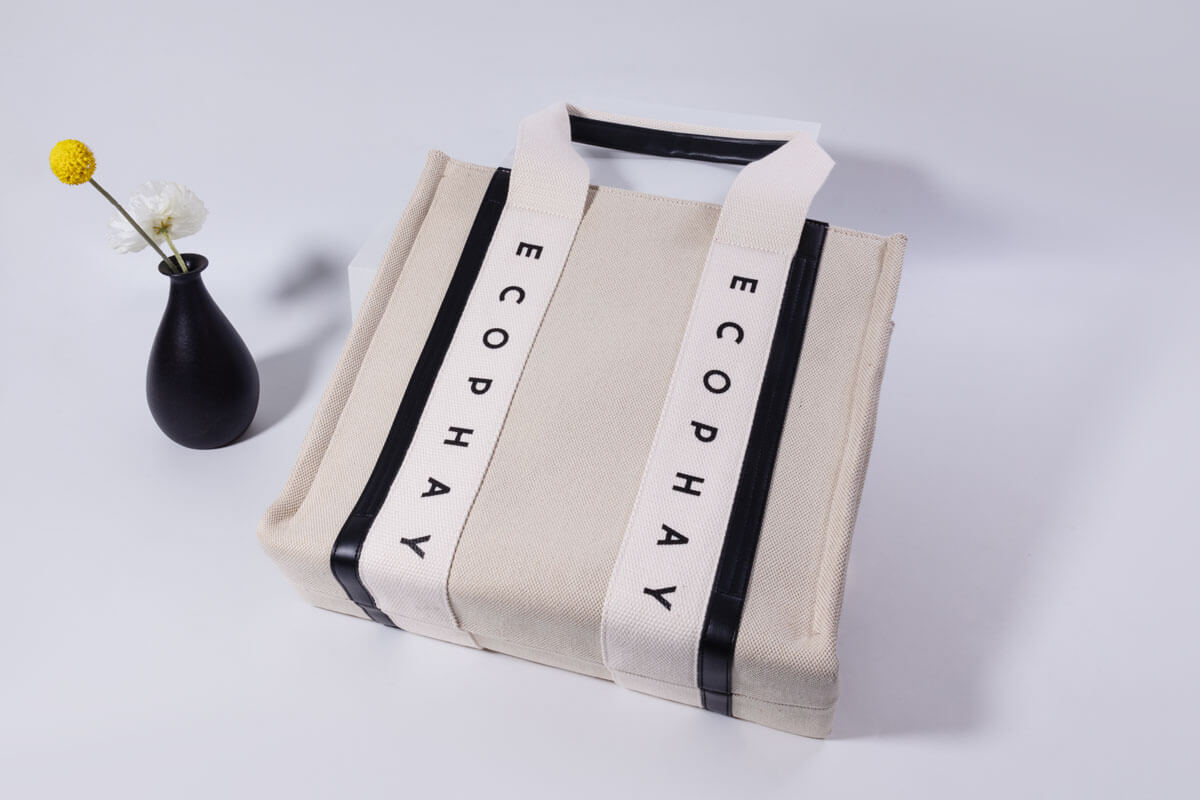
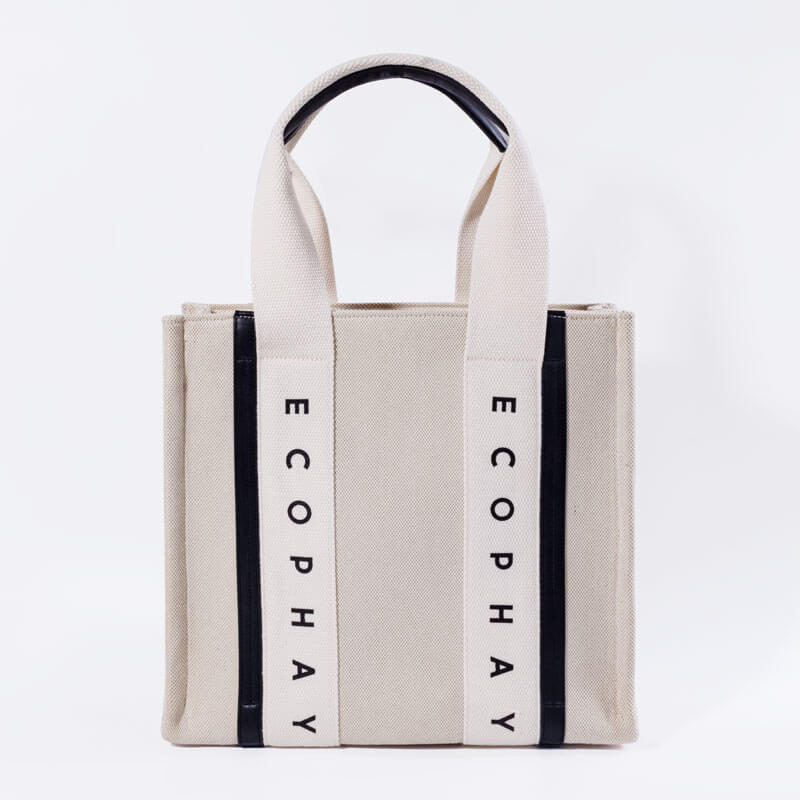
Recorded size: 330 × 300 × 105 mm. Existing product information identifies cotton construction, reinforced handles and a large internal compartment.
Existing product evidence
Six category review views cover duffle, tote, interior, carry, material and construction details. Final product suitability is confirmed against the buyer brief.

Front and 3/4 view
Category review view

Interior and compartments
Category review view

Handles, strap and base
Category review view

Front and 3/4 view
Category review view

Closure and organization
Category review view

Logo, zipper and seams
Category review view
Neoprene is not a single universal specification. The buyer’s performance target and construction details have to be translated into a sample-ready material and reinforcement plan.
Specify thickness, laminated textile, hand feel, colour route and any material-document requirement.
Review base support, handle anchoring, strap attachment and seam behavior against the intended contents.
Define zipper opening, pullers, strap hardware, logo parts and metal-colour direction.
Confirm whether shoes, damp items or personal-care products require separated or wipe-clean zones.
Provide logo artwork, placement, size, colour standard, labels, charms and packaging requirements.
Check loaded shape, access, balance, comfort, stitching, hardware and branding before bulk planning.
MOQ, sample route and production planning depend on the complete product brief. Send quantity by style and colour rather than only a total project number.
Duffle or tote, intended user, gym/studio use, dimensions, target capacity and representative contents.
Opening, compartments, shoe or wet-item separation, base support, handles, shoulder strap and trolley requirement.
Neoprene or woven route, thickness or weight, lining, colour, surface finish and required document scope.
Logo artwork, Pantone direction, labels, zipper pullers, bag charms, hangtags and retail packaging.
Quantity by style and colour, target price where available, sample expectations and number of SKUs.
Destination country/postcode, required delivery date, launch window and any packing or import requirements.
These answers define the boundary between a useful RFQ and an unsupported promise.
Yes. Treat them as separate SKUs under one collection brief. Provide the intended contents, quantity, dimensions and colour split for each format so construction and commercial planning can be reviewed separately.
A Tech Pack is the preferred starting point for a custom structure. It should define dimensions, materials, components, artwork and packing. Feasibility, sample stages and production scope are confirmed only after the real file and quantity plan are reviewed.
The public evidence on this page shows relevant existing duffle and tote structures, not a completed neoprene gym-bag order. A neoprene gym bag is handled as a new development route until a sample or bulk project provides stronger evidence.
MOQ depends on construction, material route, colour split, components, branding and packaging. Send quantity by style and colour so the project can be reviewed against the selected route.
Send the Tech Pack or reference, intended use, contents, dimensions, material direction, quantity by SKU and colour, logo files, packaging, destination and required delivery date.
Tell us whether you are developing a gym duffle, gym tote or coordinated active collection. We will review the product route, specifications and project requirements before confirming the next step.